Light Construction Debris Removal
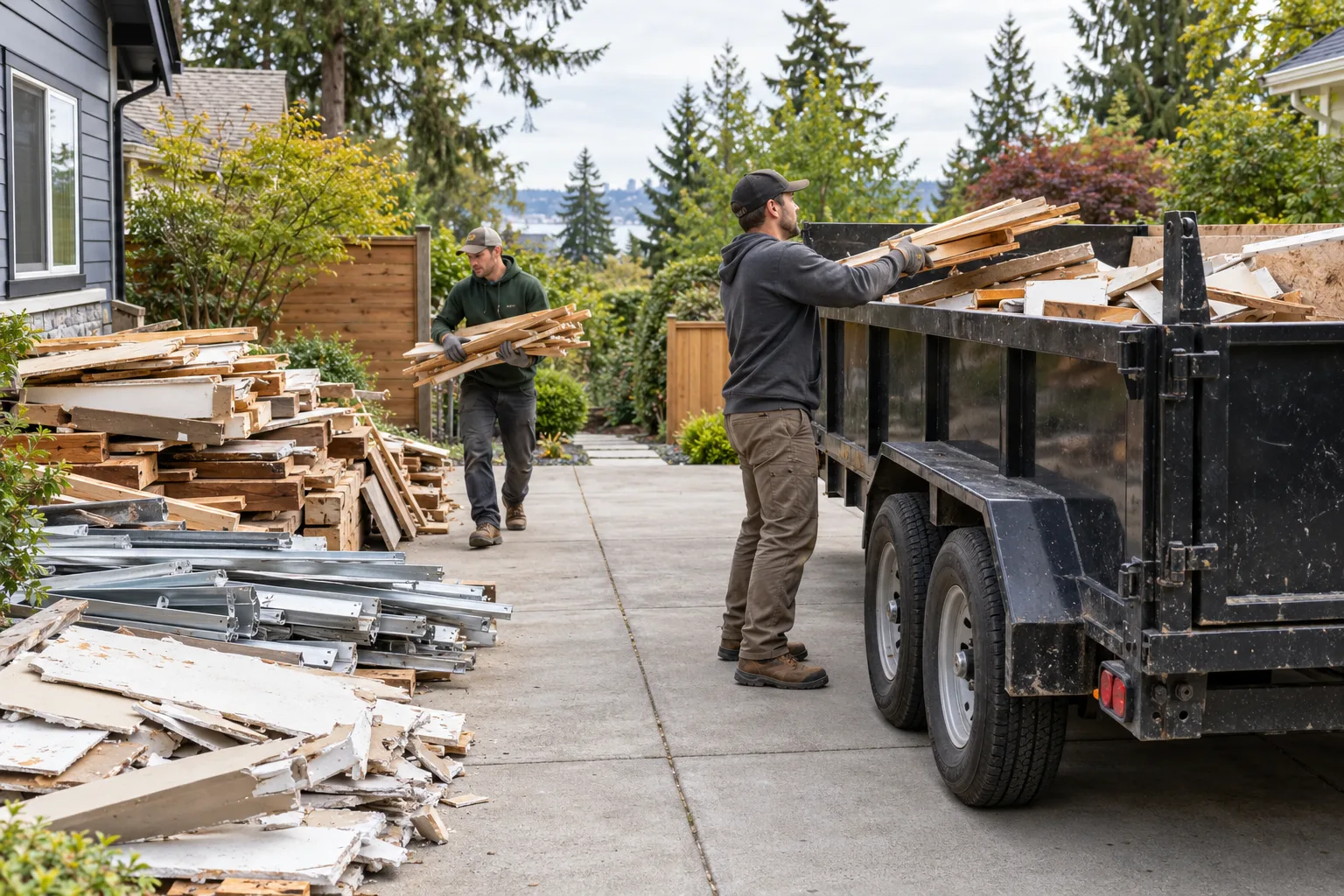
Outdoor tear-outs can leave a mix of wood, metal, rigid plastic, fasteners, and dense material. A clear inventory keeps hazardous or restricted waste out and helps match the load to facility rules.
What this scope can cover
- Approved wood, metal, and rigid plastic
- Bagged or bundled small debris that can be handled safely
- Loading from an accessible staging area
- Final sweep of the agreed collection zone
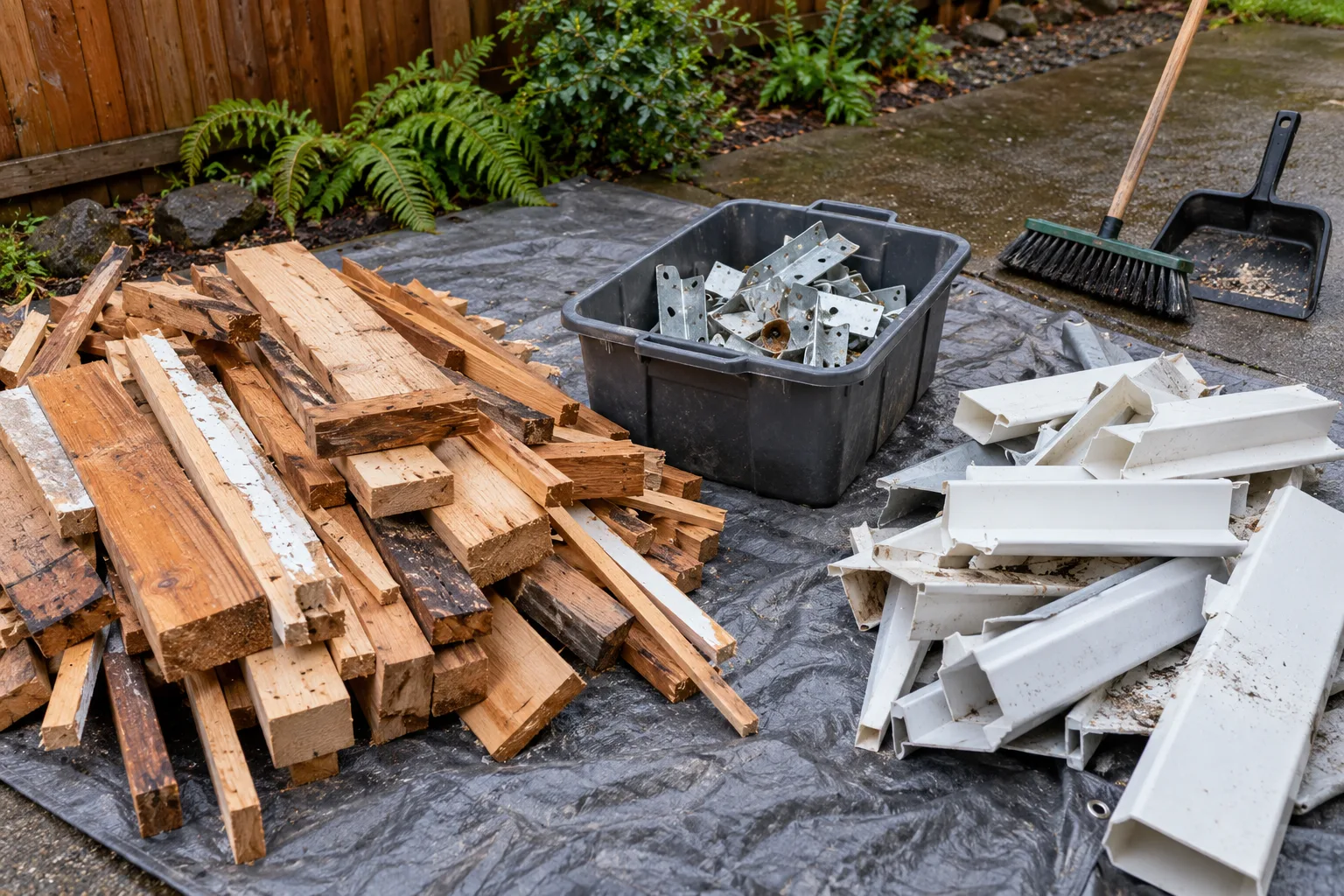
Prepare the site without creating a second project.
Share the current condition and leave heavy or unstable pieces in place. The goal is a useful assessment, not unpaid demolition before the estimate.
- 1Separate chemicals, paint, batteries, and unknown liquids.
- 2Keep sharp fasteners contained and boards stacked safely.
- 3Identify concrete, soil, roofing, or other dense loads in advance.
- 4Protect the route and keep debris dry where facility rules require it.
What shapes the estimate
Photos help with early planning. The final scope depends on the actual materials, access, and work agreed at the property.
- Material type, volume, and density
- Sorting already completed
- Loose versus bundled debris
- Carry distance and stairs
- Facility acceptance and disposal requirements
Construction Debris Removal questions
See all FAQsCan mixed debris go in one pile?
A mixed pile is harder to assess and may limit recycling. Separate wood, metal, rigid plastic, and restricted items when practical.
Do you take paint or spa chemicals?
Do not mix them into construction debris. Seattle and King County provide separate household hazardous-waste options.
Why do photos matter?
Photos show material type, volume, sharp edges, and access. Include a wide view plus close views of anything dense or unusual.
How to Sort Debris After a Backyard Teardown
A sorting plan for wood, metal, rigid plastic, dense material, and hazardous products after a small outdoor project.
Define the scope before the crew arrives.
Use the estimate checklist to capture the item, access, utilities, and finish line.